Cost Saving Substitutes - Pantry Swaps
I’m sure we’ve all experienced this feeling. You walk into the kitchen, ready to make dinner, open the pantry, and then “oh no, I forgot…!”
We’re here to help you use what you have on hand — not only for those “OH NO” moments, but also for those “what can I cut” moments. Running out of pantry ingredients can sneak up on you. Sometimes it seems to all happen in the same week.
It’s easy to google a swap, but sometimes it’s not the best idea for what you are making. Let’s start with an understanding of what an ingredient is trying to accomplish.
The five basic tastes
We all know the five basic tastes:
- Sweet — signals sugars/energy
- Sour — detects acidity
- Salty — detects sodium
- Bitter — warns of potential toxins
- Umami — savory taste from glutamates (e.g., aged cheese, soy sauce)
But in cooking, there are other factors that address flavor better. Chef and author Samin Nosrat has popularized another way of looking at the necessary components in a dish.
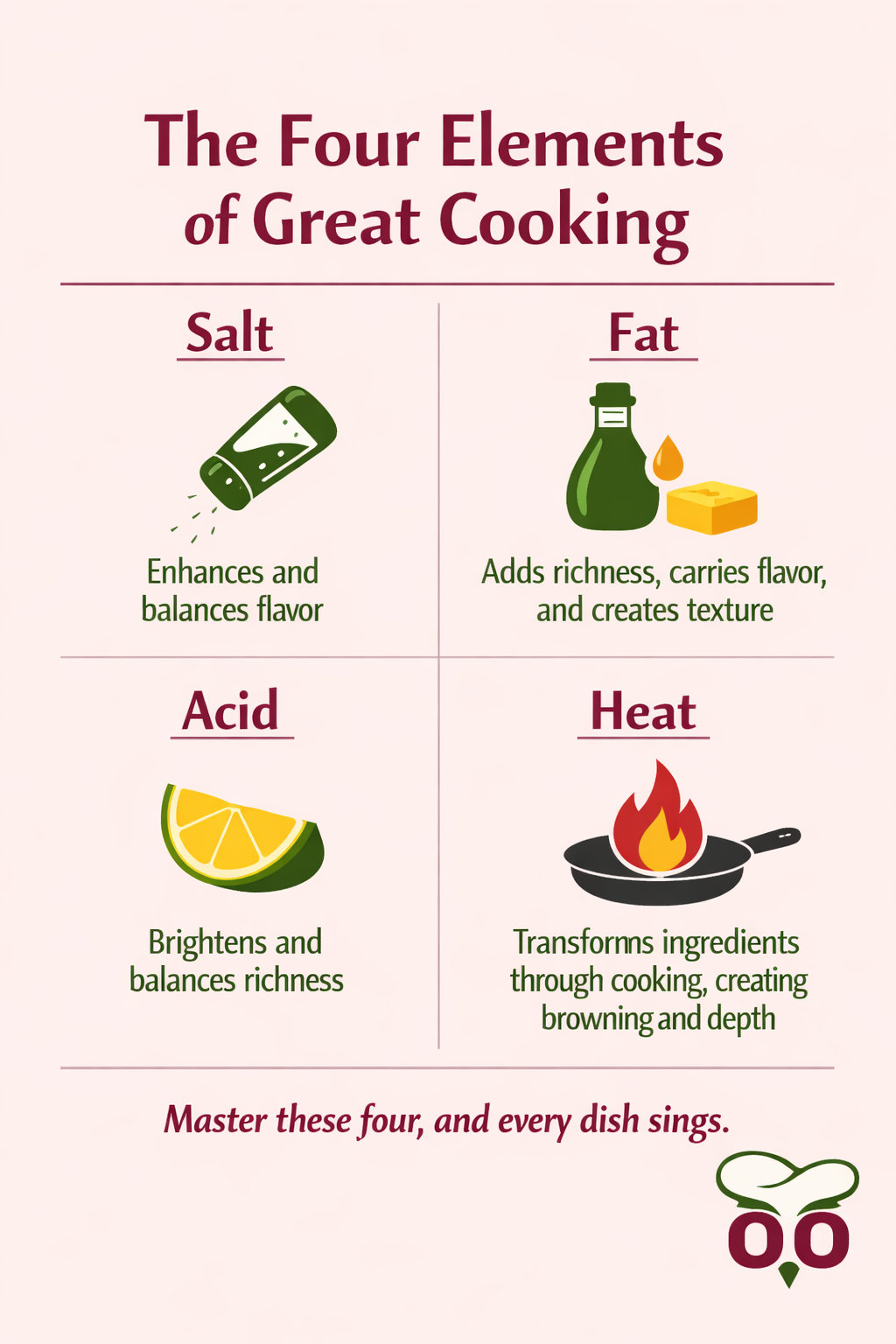
These are what make a successful recipe, and what to keep in mind for a successful swap. With these in mind, the first question is: what is this ingredient trying to accomplish?
Salt swaps
Let’s start with salt…
These aren’t just added for a salty flavor. Salt is needed to unlock the palate and amplify the flavor. Without it, you won’t be able to taste the food as well.
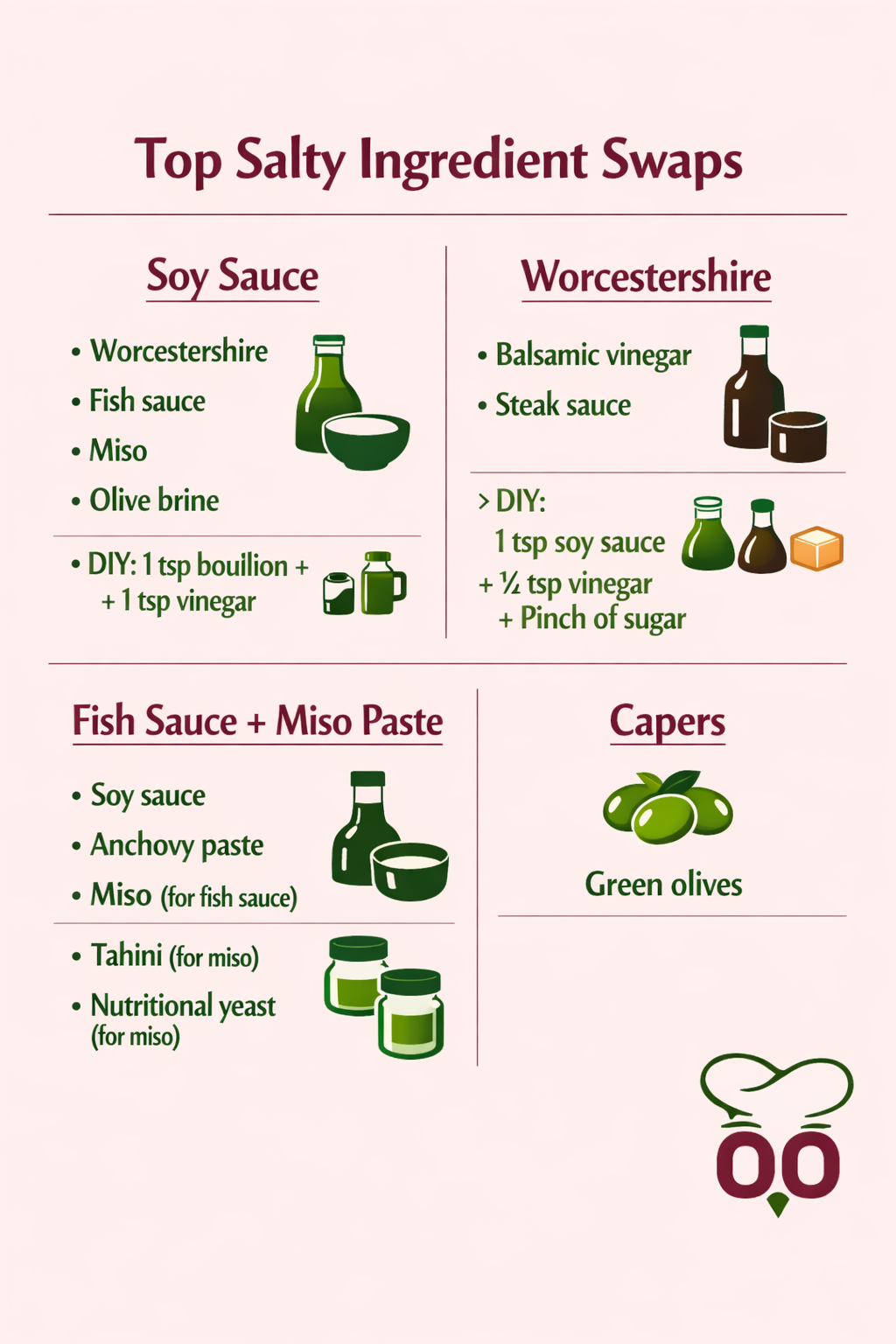
You’ll notice that a lot of these were actually two swaps. The salty components also contained acid.
Acid swaps
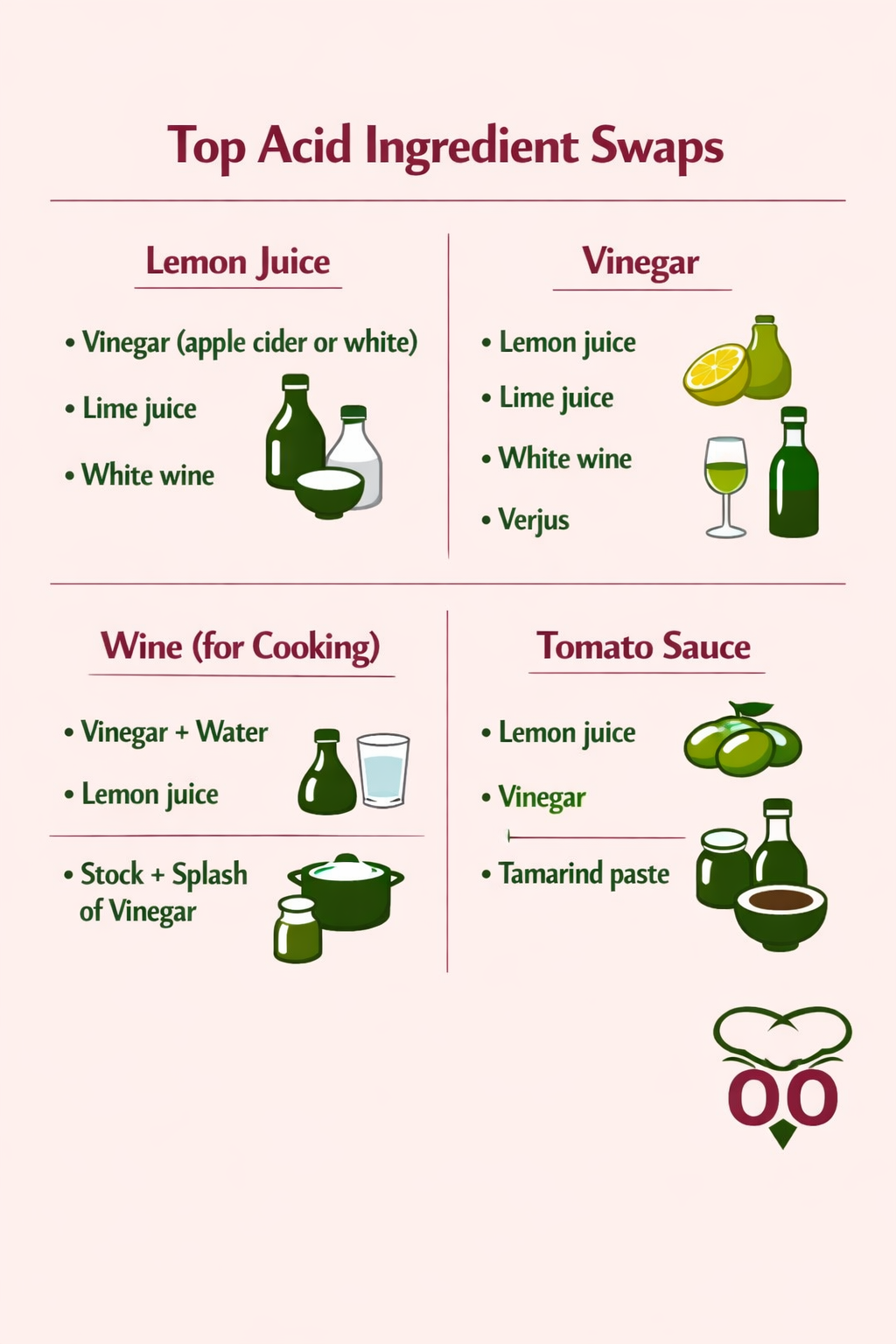
Don’t skip the acid, just find a swap. Acid is important to liven up a dish and balance all of these tastes together.
Here are some other acid replacements.
Fat swaps
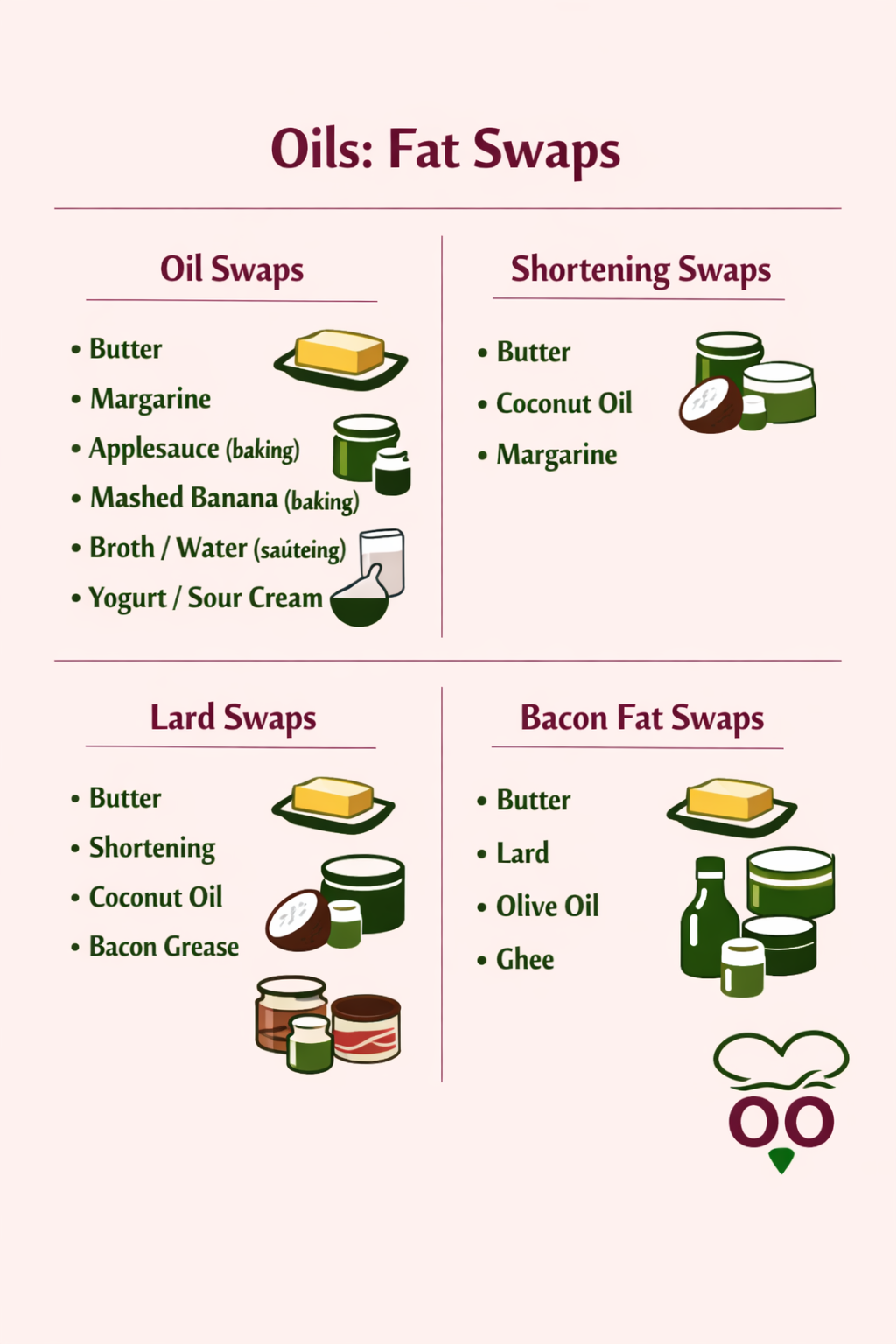
Fat replacements can be a bit trickier. We are not only replacing the flavor, but texture and mouth feel. Let’s break these down into a few categories: oils, dairy, and emulsifiers.
Oils
For oils, a common question arises regarding baked goods. These are included in the graph below, but I would recommend thinking about baking replacements as a different subject than dinner replacements. (You wouldn’t sauté in apple sauce.) These are especially useful for sides and salads.
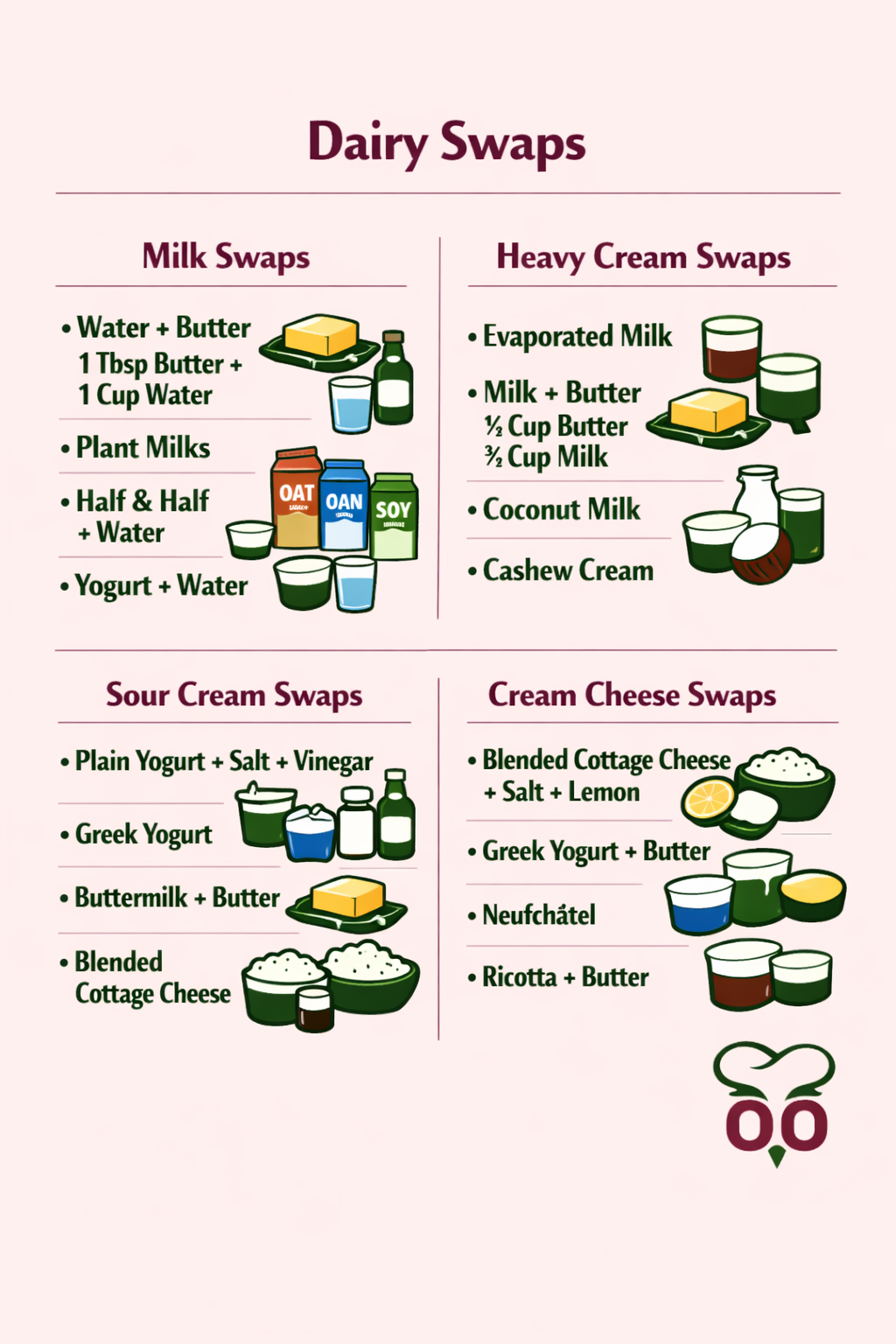
Dairy
Dairy is always a good swap to know, because it won’t keep as long. It also can get a little pricey if you’re having to buy several types at once. These can be used in our breakfast pizza.
Emulsifiers
Emulsifiers are important in any dish. They not only add flavor but help bind the ingredients together, like in meatloaf. Before replacing, picture what the ingredient is achieving in the dish.
- Is it a casserole? Think if there is anything else that is helping achieve the thickness that you need to hold it together, like tuna casserole.
- Is it a soup? Think about what type of richness it adds.
I’m providing quick basic swaps, but sometimes you may want to add a little more seasoning or a little more fat to get it perfect.
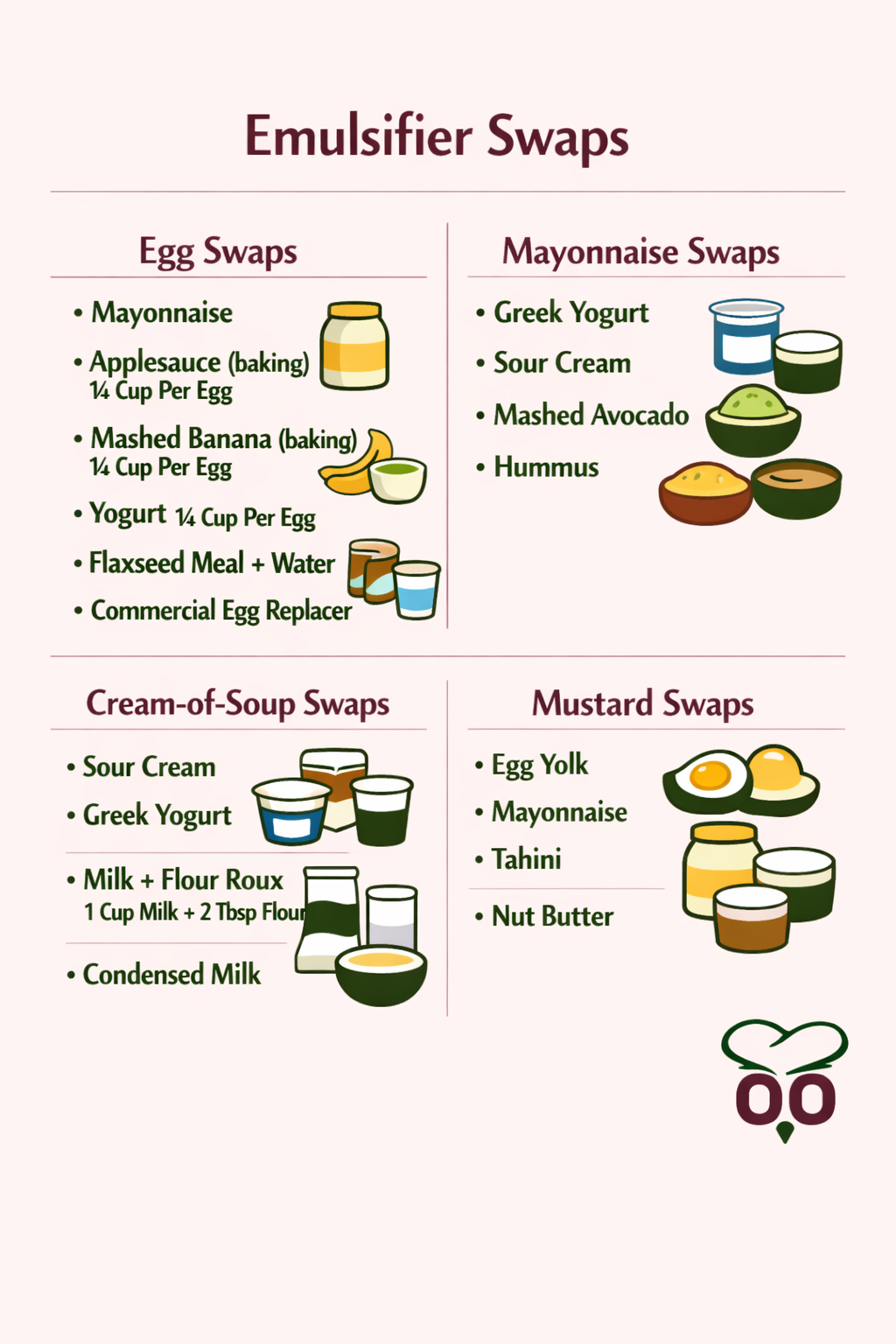
I did include mustard. Although it is not a fat, as an emulsifier the replacements are fat.
I hope you found this useful and will be able to put these into practice. I’d love to hear what swaps you’ve come up with.
More cost-saving guides coming soon: Cheaper Swaps and Sale Swaps.
Found a swap that worked? Join our FoodWise Facebook group to share your creations, ask questions, and swap ideas.